The Carlsbad Barrio Mexican American Heritage, the Mexican Revolution, and the Families Who Helped Build Carlsbad
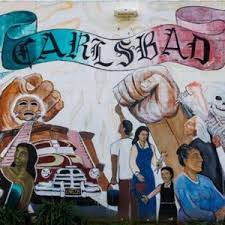
“To understand Carlsbad, we must remember the families whose work, traditions, and determination helped build the community.”
Carlsbad’s history is often told through its mineral water, the railroad, grand hotels, agricultural fields, and beaches.
But another essential part of the story lives just beyond the center of the Village.
The Carlsbad Barrio is one of the city’s oldest neighborhoods and an important center of Carlsbad’s Mexican American heritage.
Its story is connected to agriculture.
The railroad.
Migration.
Family.
Faith.
Food.
Labor.
Entrepreneurship.
And the political and economic upheaval created by the Mexican Revolution of 1910.
During the early twentieth century, families from Mexico came north seeking safety, work, stability, and opportunity. Some eventually settled in Southern California communities like Carlsbad, where agriculture and railroad development created a growing demand for labor.
They planted crops.
Worked in the fields.
Maintained the railroad.
Built homes.
Raised families.
Opened businesses.
Established churches.
Shared traditions.
And created a neighborhood that became part of Carlsbad’s identity.
The Barrio is not simply a neighborhood within Carlsbad.
It is part of the story of how Carlsbad was built.
Before the Barrio
Carlsbad Becomes an Agricultural and Railroad Community
During the late nineteenth and early twentieth centuries, Carlsbad was developing as both a seaside destination and an agricultural community.
The arrival of the railroad helped connect the small settlement to larger markets throughout California.
Agriculture expanded.
Avocados.
Citrus.
Vegetables.
Flowers.
Bean fields.
Tomatoes.
Strawberries.
And other crops became part of the local economy.
But farms, ranches, packing houses, and railroads required workers.
As Carlsbad’s agricultural industry expanded, Mexican laborers became increasingly important to the economy of Southern California.
Some workers traveled seasonally.
Others settled permanently.
Over time, families established homes and neighborhoods near the places where they worked.
One of those communities became the Carlsbad Barrio.
The Mexican Revolution of 1910
A Revolution That Changed Mexico—and Southern California
The Mexican Revolution began in 1910 after decades of political inequality, concentrated land ownership, poverty, and authoritarian rule under President Porfirio Díaz.
What began as a political uprising became a long and complicated struggle involving revolutionary leaders, regional armies, farmers, workers, and competing visions for Mexico’s future.
Francisco Madero.
Emiliano Zapata.
Pancho Villa.
Venustiano Carranza.
And countless ordinary families became part of the conflict.
The Revolution lasted for years.
Communities were disrupted.
Farms were destroyed.
Businesses closed.
Families were separated.
Political violence and economic instability affected millions of people.
Between 1910 and 1920, the conflict contributed to a major movement of people across the United States–Mexico border.
Many Mexican families came north seeking safety and employment.
At the same time, Southern California’s growing agricultural industry needed workers.
These forces came together.
Migration from Mexico increased.
Agricultural communities expanded.
Mexican neighborhoods developed throughout California.
And the demographic and cultural landscape of Southern California began to change.
From Revolution to Migration
Why Families Came North
Migration rarely happens for one reason.
Some families fled violence connected to the Revolution.
Others lost land or economic opportunities.
Some followed relatives who had already traveled north.
Others were recruited or attracted by employment opportunities in agriculture, construction, mining, and the railroad industry.
The border between Mexico and the United States was also much more fluid during the early twentieth century than it would become in later decades.
People traveled back and forth.
Workers followed agricultural harvests.
Families created connections between communities in Mexico and the United States.
Eventually, some settled permanently.
Southern California offered employment.
Carlsbad offered agricultural work.
And families began creating new lives.
The Mexican Revolution happened hundreds of miles away.
But its effects eventually became part of Carlsbad’s story.
The Birth of the Carlsbad Barrio
Creating a Community Near Work, Family & Opportunity
The Barrio developed south of the Village near the agricultural fields and businesses where many residents worked.
Families built modest homes.
Relatives lived near one another.
Neighbors helped neighbors.
Children played together.
Food was shared.
Traditions were preserved.
Spanish was spoken alongside English.
And community relationships grew stronger.
The neighborhood provided something especially important for families building new lives.
A sense of belonging.
The Barrio became a place where Mexican and Mexican American families could preserve cultural traditions while becoming part of the larger Carlsbad community.
Over time, generations of families grew up there.
The neighborhood became part of Carlsbad.
And Carlsbad became part of their family stories.
The People Who Worked the Fields
Mexican Labor and Carlsbad’s Agricultural Economy
Carlsbad’s agricultural success depended on workers.
Fields had to be planted.
Crops irrigated.
Weeds removed.
Produce harvested.
Flowers cut.
Fruit packed.
Products transported.
Mexican and Mexican American workers played an important role in this agricultural economy.
Their labor contributed to industries that would become part of Carlsbad’s identity.
The bean fields.
Avocado groves.
Flower fields.
Tomato farms.
Strawberry fields.
Nurseries.
Packing houses.
And other agricultural businesses.
Today, visitors often admire Carlsbad’s agricultural heritage.
But understanding that heritage also requires remembering the people whose labor made those industries possible.
The Railroad
Another Path to Employment and Opportunity
The railroad was another important part of the Barrio story.
Railroads connected Carlsbad to San Diego, Los Angeles, and markets across the country.
They transported passengers.
Agricultural products.
Building materials.
Mail.
And supplies.
Mexican workers were part of the labor force that built and maintained railroad networks throughout the American Southwest.
Railroad employment provided opportunities for workers and helped establish Mexican communities near rail corridors.
Carlsbad’s proximity to the railroad, agricultural fields, and local businesses made the Barrio a practical place for families to settle.
Building Homes, Families & Community

Life in the Barrio
Life in the Barrio was centered around family and community.
Families helped one another.
Children grew up surrounded by relatives and neighbors.
Food traditions were passed from one generation to the next.
People gathered for celebrations.
Religious traditions were maintained.
Neighbors supported families during difficult times.
The neighborhood created a strong sense of identity.
Residents weren’t simply workers.
They were parents.
Grandparents.
Business owners.
Veterans.
Church members.
Community leaders.
Cooks.
Entrepreneurs.
And eventually, generations of Carlsbad residents.
Their lives helped shape the community.
Food as Cultural Memory
The Recipes That Traveled North
When families migrate, they bring more than their belongings.
They bring language.
Music.
Faith.
Celebrations.
Stories.
And food.
Recipes traveled north with Mexican families.
Tamales.
Tortillas.
Beans.
Rice.
Chiles.
Salsas.
Stews.
Family dishes.
Cooking traditions were passed from grandparents to parents to children.
Food became a connection to home.
A way to preserve culture.
A way to teach younger generations.
And a way to bring people together.
Eventually, those food traditions became part of Southern California’s culinary identity.
The Mexican food we enjoy throughout San Diego County today is connected to generations of families who brought their culinary traditions north and adapted them to new communities.
Lola’s and the Barrio
A Family Business That Preserves the Neighborhood Story
One of the most important businesses connected to the Barrio is Lola’s 7 Up Market & Deli.
Lola’s became a neighborhood gathering place.
Families stopped for food.
Workers came for lunch.
Neighbors shared news.
Children grew up visiting the market.
Generations of the same families returned.
The story of Lola Jauregui and her descendants reflects the larger story of the Barrio.
Family.
Food.
Entrepreneurship.
Community.
Cultural traditions.
And the determination to preserve something meaningful for the next generation.
For Carlsbad Food Tours, Lola’s became one of our original tasting locations when we launched in 2014.
Sharing Lola’s story allowed our guests to understand an important lesson.
Carlsbad’s history isn’t only found in historic hotels and beautiful homes.
It also lives in neighborhood businesses.
Family recipes.
Kitchens.
Community traditions.
And the people whose stories have sometimes received less attention in traditional histories.
The Barrio and a Changing Carlsbad
Growth, Development & Preserving Community Identity
Carlsbad changed dramatically during the twentieth century.
The population grew.
Agricultural land became residential neighborhoods.
Tourism expanded.
Property values increased.
The Village became a destination.
New businesses arrived.
And development pressures increased.
The Barrio changed as well.
Some longtime families remained.
Others moved away.
Homes changed ownership.
New residents arrived.
Businesses opened and closed.
But the neighborhood’s historical and cultural importance remained.
Preserving the Barrio’s story is important because communities can lose more than buildings when neighborhoods change.
They can lose memories.
Family histories.
Cultural traditions.
And the stories of the people who helped build the city.
Behind the Scenes

History Is More Than Buildings
Historic preservation often focuses on architecture.
Old houses.
Hotels.
Churches.
Commercial buildings.
But communities are built by people.
The workers who planted the fields.
The families who built homes.
The women who preserved recipes.
The parents who raised children.
The entrepreneurs who opened businesses.
The neighbors who helped one another.
The veterans who returned home.
The community leaders who fought for improvements.
Those stories are also historic resources.
The Barrio reminds us that preserving Carlsbad’s history means preserving the stories of the people who lived it.
Why This Story Matters to Carlsbad Food Tours
Carlsbad Food Tours was created to help visitors experience more than food.
We want our guests to understand Carlsbad.
That means telling the complete story of the community.
The grand hotels matter.
The railroad matters.
The mineral water matters.
The early founders matter.
The agricultural pioneers matter.
And the Mexican and Mexican American families who worked, raised families, opened businesses, and built communities here matter.
When we share the story of the Barrio, we help guests understand that Carlsbad was built by many people.
Different cultures.
Different families.
Different experiences.
Together, they created the community we know today.
If These Streets Could Talk…
“I’ve watched families arrive with little more than hope and determination. I’ve seen workers leave before sunrise for the fields and return home to children waiting at the door. I’ve heard Spanish and English, music and laughter, celebrations and prayers. I’ve watched children grow into parents and grandparents. The city changed around me, but the stories of the families who built this neighborhood remain beneath every street.”
Cherimarie’s Reflection
The more I learn about Carlsbad’s history, the more I realize how important it is to tell the stories of people whose contributions may not always appear in traditional histories.
We talk about the railroad.
The hotels.
The founders.
The mineral water.
The farmers.
But agriculture doesn’t exist without workers.
Cities don’t grow without families.
Communities don’t develop without people willing to build homes, raise children, open businesses, and create traditions.
The Mexican Revolution happened far from Carlsbad.
But the movement of families that followed helped reshape Southern California.
Some of those families came to communities like Carlsbad.
They worked.
They stayed.
They built lives.
Their children became Carlsbad residents.
Their grandchildren became community leaders, business owners, professionals, veterans, parents, and grandparents.
Their stories became Carlsbad stories.
That’s why the Barrio belongs in the Carlsbad Food Tours Storytelling Playbook.
Because if our goal is to help people understand Carlsbad, we must tell the stories of all the people who helped build it.
Then & Now
Then
The Mexican Revolution and the economic disruption surrounding it contributed to increased migration from Mexico during the early twentieth century.
Southern California’s agricultural and railroad industries created employment opportunities.
Mexican families settled in communities throughout the region.
In Carlsbad, families established homes near agricultural fields, railroad employment, and local businesses.
Over generations, the Barrio became an important center of Mexican American family life and community identity.
Now
Carlsbad is a prosperous coastal destination known for tourism, technology, resorts, restaurants, beaches, and quality of life.
The Barrio remains an important reminder of another part of the city’s story.
The workers.
Families.
Businesses.
Cultural traditions.
And generations of Mexican American residents who helped build Carlsbad.
The city changed.
The fields disappeared.
The population grew.
But the stories remain.
Did You Know?
- The Mexican Revolution began in 1910 and contributed to major political, economic, and social disruption in Mexico.
- The Revolution was one factor that increased migration from Mexico to the United States during the early twentieth century.
- Southern California agriculture and railroad industries created employment opportunities for Mexican workers.
- Mexican and Mexican American laborers contributed to Carlsbad’s agricultural development.
- The Carlsbad Barrio developed near employment opportunities, agricultural fields, the railroad, and the growing Village.
- The Barrio became home to generations of Mexican and Mexican American families.
- Food, faith, family relationships, language, celebrations, and neighborhood businesses helped preserve cultural traditions.
- Lola’s 7 Up Market & Deli became one of the neighborhood businesses connected to the Barrio’s history.
- Lola’s was also one of the original Carlsbad Food Tours tasting locations in 2014.
- Preserving the Barrio’s history means preserving both the neighborhood and the stories of the families who built it.
Historic Community Quick Facts
Community: The Carlsbad Barrio
Historic Era: Early 20th Century to Present
Major Historical Influence: Mexican migration, including migration shaped by the Mexican Revolution beginning in 1910
Economic Connections: Agriculture, railroad employment, construction, hospitality, and local businesses
Cultural Heritage: Mexican and Mexican American
Community Themes: Family, labor, migration, entrepreneurship, food, faith, cultural traditions, resilience, and belonging
Important Story Connection: Lola’s 7 Up Market & Deli
Carlsbad Food Tours Connection: Barrio history, agricultural heritage, Mexican culinary traditions, Lola’s, and the history of Carlsbad Food Tours
A Seat at the Table
If you could sit down with one of the first Mexican families who settled in Carlsbad and ask them what they hoped future generations would remember, what do you think they would say?
Perhaps they would talk about the sacrifices they made.
The families they raised.
The work they did.
The traditions they preserved.
The businesses they built.
Or simply their hope that future generations would remember that they were here.
That they contributed.
That they belonged.
And that their stories are part of Carlsbad.
Our Legacy
The Carlsbad Barrio represents an essential chapter in the history of the community.
Its story connects Carlsbad to the Mexican Revolution.
Migration.
Agriculture.
The railroad.
Labor.
Family.
Food.
Entrepreneurship.
And generations of Mexican American residents who helped build the city.
The Barrio reminds us that history isn’t only created by famous founders or preserved inside landmark buildings.
History is also created by ordinary families.
People who leave their homes seeking safety or opportunity.
Workers who plant and harvest fields.
Parents who raise children.
Neighbors who create communities.
Entrepreneurs who open businesses.
Families who preserve recipes and traditions.
And generations who transform a new place into home.
Their work became part of Carlsbad’s economy.
Their culture became part of Carlsbad’s identity.
Their food became part of Carlsbad’s culinary story.
Their children and grandchildren became part of the community.
The story of the Barrio isn’t separate from Carlsbad history.
It is Carlsbad history.
Story Connections
This story connects with Lola’s 7 Up Market & Deli, Carlsbad’s Agricultural Heritage, The Bean Fields of Carlsbad, The Railroad Comes to Carlsbad, Early Families of Carlsbad, Mexican Culinary Heritage in Southern California, Early Schools of Carlsbad, Historic Highway 101, Carlsbad Village, and The History of Carlsbad Food Tours.
- Carlsbad Food Tours
https://www.carlsbadfoodtours.com/ - Fresco Cocina
- https://www.carlsbadfoodtours.com/blog/fresco-cocina-264-fresco/
- Carlsbad Barrio
- https://www.carlsbadfoodtours.com/blog/the-carlsbad-barrio-mexican-american-heritage-the-mexican-revolution-and-the-families-who-helped-build-carlsbad/
- Lola’s Mexican Deli
- https://www.carlsbadfoodtours.com/blog/lolas-7-up-market-deli-a-family-legacy-the-heart-of-the-barrio-and-an-original-carlsbad-food-tours-partner/
- Jalisco Cantina
- https://www.carlsbadfoodtours.com/blog/jalisco-cantina-mexican-food-margaritas-and-the-spirit-of-celebration-in-carlsbad-village/
- Norte Mexican
- https://www.carlsbadfoodtours.com/blog/norte-mexican-food-cocktails-the-montanez-family-generations-of-hospitality-and-a-historic-corner-of-carlsbad/
Discover Carlsbad with Carlsbad Food Tours
The best way to understand a community is to walk its streets, meet its people, hear their stories, and taste the foods that have shaped generations.
Join Carlsbad Food Tours for a guided culinary walking experience through Carlsbad Village, where local restaurants, historic neighborhoods, family businesses, agricultural heritage, architecture, art, food, and community stories come together.
Taste the Food. Hear the Stories. Live the Local Experience.
Leave every guest loving Carlsbad a little more than when they arrived.
Collection
Discover Carlsbad Library – Cultural Heritage & Historic Communities
Reading Time
10 minutes
Story Themes
Mexican Revolution • Migration • Mexican American Heritage • The Barrio • Agriculture • Railroad • Labor • Family • Food • Entrepreneurship • Community • Carlsbad History