
Agua Hedionda: The Lagoon That Shaped Carlsbad’s Earliest History
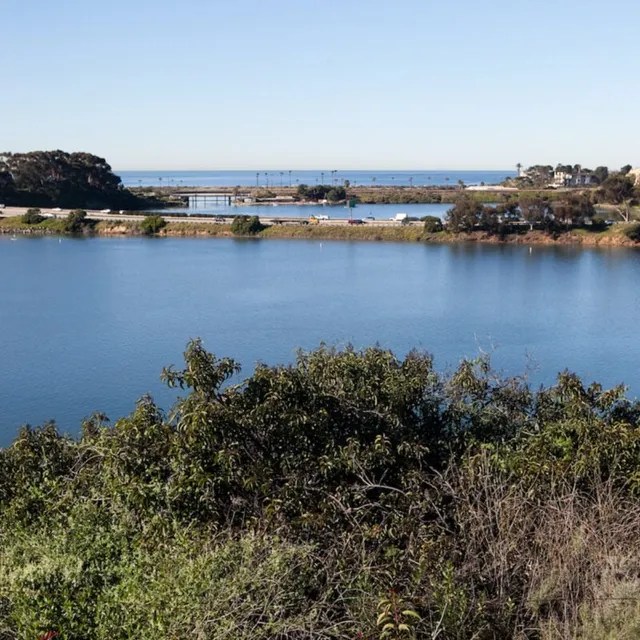
From a “Stinking Lagoon” to One of Carlsbad’s Greatest Natural Treasures
Long before Carlsbad became a seaside destination, Agua Hedionda Lagoon was one of the region’s defining landmarks. First recorded by Spanish explorers in 1769, the lagoon earned its memorable name from its sulfur-like odor and later became the centerpiece of Rancho Agua Hedionda, one of Southern California’s largest Mexican land grants. Its history connects Native Americans, Spanish explorers, Mexican ranchos, early California pioneers, and the founding of Carlsbad itself.
The First Europeans to See the Lagoon
On July 17, 1769, Father Juan Crespi, traveling with Gaspar de Portolá’s expedition, became the first European to record the beautiful coastal lagoon now known as Agua Hedionda.
The expedition had departed San Diego only days earlier in search of Monterey Bay while establishing Spain’s presence in Alta California. Crespi recorded the lagoon in his diary, naming it San Simeón Lipmaca after a nearby Native American village.
The soldiers traveling with him, however, had another name in mind.
Why Is It Called Agua Hedionda?
The soldiers noticed a strong odor drifting inland from the lagoon.
Whether the smell came from decaying fish, sulfur-rich mineral deposits, tidal marshes, or debris from a nearby abandoned Native village has long been debated. Regardless of its source, the soldiers simply called it “Agua Hedionda,” meaning “Stinking Water.”
The colorful nickname endured and remains the lagoon’s official name more than 250 years later.
Rancho Agua Hedionda
As California transitioned from Spanish to Mexican rule, the lands surrounding the lagoon became part of Rancho Agua Hedionda, a Mexican land grant awarded in 1842 to retired sea captain Juan María Marrón by Governor Juan Bautista Alvarado.
The grant stretched from today’s Carlsbad coastline several miles inland and encompassed much of what is now southern Carlsbad. Although Marrón occasionally referred to the property as Rancho San Francisco, local residents continued calling it Rancho Agua Hedionda, and the name remained.
Captain Juan María Marrón
Captain Marrón was more than a rancher.
He was an influential early Californian who served on San Diego’s governing council and participated in the political struggles that shaped early California. During the 1831 revolt against Governor Manuel Victoria, Marrón joined future governor Pío Pico and other prominent Californians in seeking political reform.
After receiving Rancho Agua Hedionda, Marrón established his family on the property, raising cattle across thousands of acres of rolling coastal hills.
The Ranch Changes Hands
When Juan María Marrón died in 1853, Rancho Agua Hedionda passed to his widow and children.
After years of legal proceedings confirming ownership under United States law following California statehood, much of the ranch was eventually sold to Francis Hinton, a former trader at Fort Yuma and an early Southern California pioneer.
Hinton expanded cattle operations across the ranch before later partnering with Robert Kelly, whose stewardship of Rancho Agua Hedionda would play a pivotal role in the future development of Carlsbad.
The Beginning of Carlsbad’s Story
The history of Agua Hedionda Lagoon is deeply intertwined with the history of Carlsbad.
The lagoon attracted explorers, supported Native American villages, became one of California’s great ranchos, and later bordered the growing community that emerged after Captain John A. Frazier discovered the region’s famous mineral water.
Without Agua Hedionda, there would have been no Rancho Agua Hedionda.
Without the rancho, there would have been no Robert Kelly, no railroad right-of-way, and perhaps no Carlsbad as we know it today.
If These Waters Could Talk…
If the calm waters of Agua Hedionda Lagoon could speak, they would tell stories of Kumeyaay villages, Spanish explorers riding horseback along the coast, Mexican rancheros tending cattle, and pioneers who believed this stretch of coastline held extraordinary promise.
For more than two centuries, the lagoon has quietly witnessed every chapter of Carlsbad’s remarkable history.
Cherimarie’s Reflection
Every time I cross the bridge over Agua Hedionda Lagoon, I’m reminded that this beautiful waterway has been part of Carlsbad’s story far longer than any building or neighborhood.
Most visitors simply admire the scenery, but beneath those peaceful waters lies a history of exploration, resilience, ranching, and community. Understanding the story of Agua Hedionda helps us appreciate how nature shaped the people who came here—and how those people, in turn, shaped the Carlsbad we enjoy today.
Storytelling Moment
Pause at one of the lagoon overlooks and imagine standing there in 1769 as Father Juan Crespi gazed across these same waters. Picture cattle grazing the surrounding hills during the Rancho era, railroad trains arriving in the distance, and the first settlers envisioning a new town by the sea. Few places in Carlsbad connect so many generations quite like Agua Hedionda Lagoon.
- John Frazier & Carlsbad’s Mineral Water Discovery
- Gerhard Schutte
- Robert Kelly Family
- Samuel Church Smith
- Magee Family
- D.D. Wadsworth
- Roy G. Chase
Written by Cherimarie Poulos
Cherimarie Poulos is the founder of Carlsbad Food Tours and has proudly called Carlsbad home for more than 30 years. Passionate about the city’s history, beaches, wildlife, restaurants, and local culture, she created the Discover Carlsbad Library to help visitors and residents experience Carlsbad like a local through authentic stories, insider tips, and unforgettable experiences.
Want to discover even more of Carlsbad’s hidden gems? Join Carlsbad Food Tours and experience the city’s rich history, fascinating stories, and incredible local restaurants—one delicious bite at a time. Taste the Food. Hear the Stories. Feel Like a Local.