Juan María Marrón: The Man Who Established Rancho Agua Hedionda
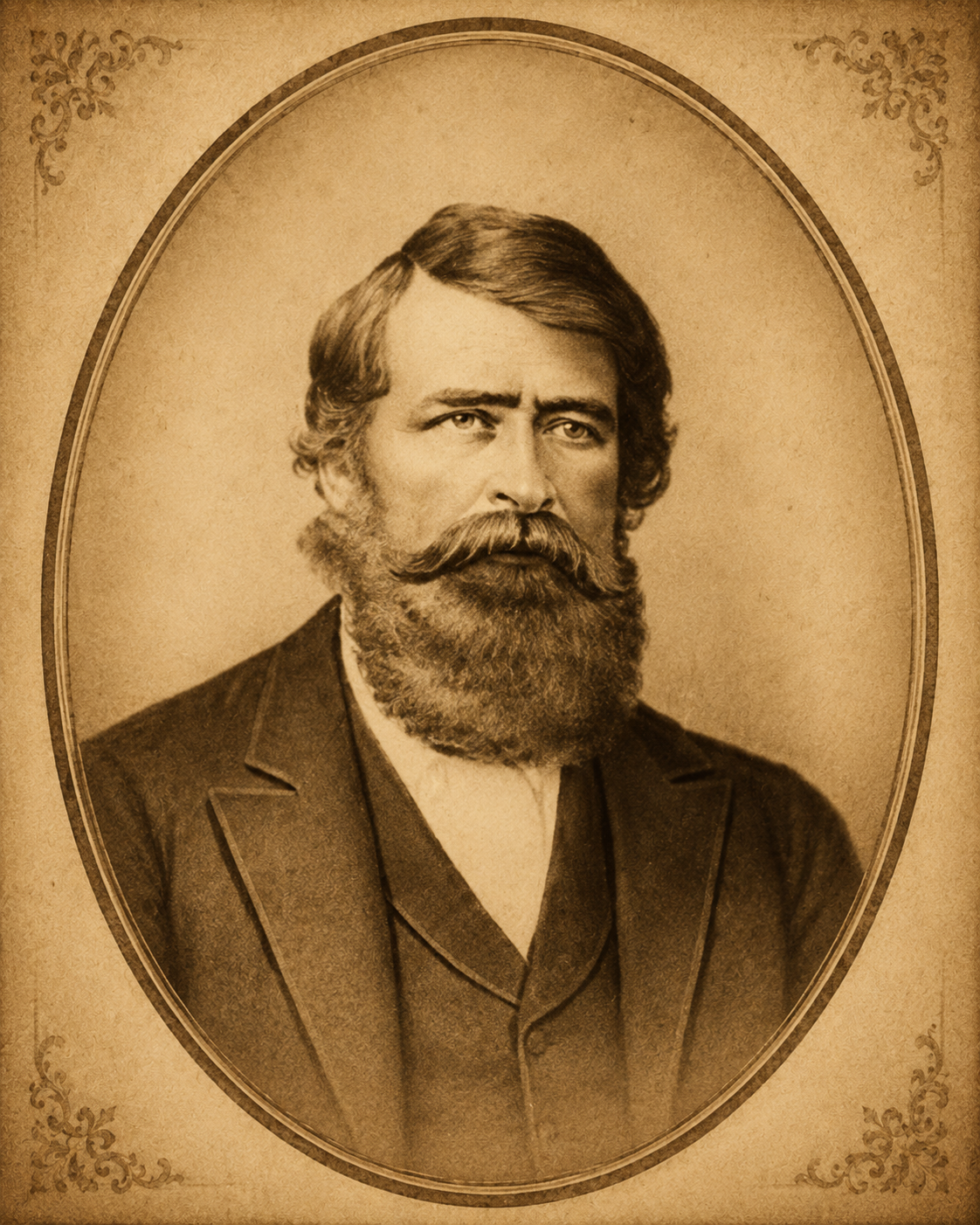
The Sea Captain Who Received One of Carlsbad’s Largest Land Grants
Before Carlsbad had streets, railroads, or even a name, its landscape was dominated by sprawling Mexican ranchos. Among the most important was Rancho Agua Hedionda, granted to Captain Juan María Marrón in 1842. A respected sailor, civic leader, and ranchero, Marrón became one of the earliest landowners in what is now Carlsbad. His stewardship of the rancho laid the groundwork for future pioneers like Francis Hinton and Robert Kelly and ultimately for the city itself.
From the Sea to Southern California
Juan María Marrón arrived in Alta California during a time of tremendous change.
A retired sea captain, Marrón settled in San Diego around 1821, shortly after Mexico gained independence from Spain. He quickly became an active member of the growing community, earning respect as both a businessman and civic leader.
Marrón married Felipa Osuna, daughter of Juan María Osuna, one of San Diego’s earliest and most influential settlers. Through this marriage, he became connected to several of Southern California’s pioneering families, strengthening his place in the region’s history.
Rancho Agua Hedionda
In 1842, Mexican Governor Juan Bautista Alvarado awarded Marrón the Rancho Agua Hedionda land grant.
Covering more than 13,000 acres, the rancho stretched from today’s Pacific coastline several miles inland and encompassed much of present-day southern Carlsbad.
The grant included rolling hills, fertile grazing land, freshwater sources, and the lagoon known today as Agua Hedionda.
Although Marrón occasionally referred to the property as Rancho San Francisco, local residents continued calling it Rancho Agua Hedionda, and that name has remained ever since.
A Leader During California’s Mexican Era
Captain Marrón was more than a ranch owner.
He served as a regidor, or member of San Diego’s governing council, helping oversee civic affairs during the Mexican period.
He also participated in one of California’s most significant political events.
In 1831, Marrón joined Pío Pico, Juan Bandini, José Antonio Carrillo, and other prominent Californians in a revolt against Governor Manuel Victoria. Although the uprising was initially unsuccessful, Victoria resigned shortly afterward, and Pío Pico eventually became governor of Alta California.
These events placed Marrón among the influential figures helping shape California before it became part of the United States.
Life on the Rancho
Rancho Agua Hedionda was a working cattle ranch.
Like many California ranchos of the era, thousands of acres were devoted to grazing livestock across the coastal hills.
Life required resilience.
Legends tell of occasional conflicts with local Native Americans, including one story that Marrón sought refuge in the surrounding hills while friendly Native women secretly brought him food until tensions subsided. Whether entirely factual or partly folklore, the story reflects the challenges faced by early ranch families living in remote Southern California.
Passing the Rancho to the Next Generation
Juan María Marrón died in 1853, leaving Rancho Agua Hedionda to his widow and children.
Because California had become part of the United States following the Mexican-American War, ownership of Mexican land grants required confirmation through American courts.
After years of legal proceedings, the United States officially recognized the Marrón family’s claim in 1872, securing ownership of the historic rancho.
Not long afterward, much of the property was sold to Francis Hinton, beginning the next chapter in the history of Rancho Agua Hedionda.
The Foundation for Modern Carlsbad
Although Marrón never witnessed the founding of Carlsbad, his land grant became the setting for many of the events that shaped the city’s future.
Francis Hinton expanded ranching operations there.
Robert Kelly inherited and managed the property.
The railroad later crossed the rancho, connecting San Diego with Los Angeles.
Nearby, Captain John A. Frazier discovered the mineral water that inspired Carlsbad’s name.
In many ways, the story of Carlsbad begins with the land that Juan María Marrón first called home.
If These Hills Could Talk…
If the hills surrounding Agua Hedionda Lagoon could speak, they would remember cattle roaming across open grasslands, horsemen riding dusty trails to San Diego, and a retired sea captain who traded life on the ocean for the promise of California’s frontier.
They would remember the beginning of Rancho Agua Hedionda—and the man who first called it his own.
Cherimarie’s Reflection
One of the things I love most about sharing Carlsbad’s history is discovering how every generation built upon the work of those who came before.
Visitors often know the stories of the railroad or the mineral water, but few realize that much of our city began as one enormous rancho owned by Juan María Marrón.
His story reminds us that Carlsbad’s history didn’t begin with the town itself—it began decades earlier with pioneers who saw opportunity in this beautiful stretch of California coastline.
Storytelling Moment
The next time you look across Agua Hedionda Lagoon, imagine standing there in the 1840s. Instead of neighborhoods and shopping centers, picture thousands of acres of open ranchland stretching toward the horizon. Horsemen ride the trails, cattle graze the hillsides, and Captain Juan María Marrón surveys the vast property that would one day become part of modern Carlsbad.
Continue the Story
Continue exploring Carlsbad’s earliest pioneers:
- John Frazier & Carlsbad’s Mineral Water Discovery
- Gerhard Schutte
- Robert Kelly Family
- Samuel Church Smith
- Magee Family
- D.D. Wadsworth
- Roy G. Chase
Written by Cherimarie Poulos
Cherimarie Poulos is the founder of Carlsbad Food Tours and has proudly called Carlsbad home for more than 30 years. Passionate about the city’s history, beaches, wildlife, restaurants, and local culture, she created the Discover Carlsbad Library to help visitors and residents experience Carlsbad like a local through authentic stories, insider tips, and unforgettable experiences.
Want to discover even more of Carlsbad’s hidden gems? Join Carlsbad Food Tours and experience the city’s rich history, fascinating stories, and incredible local restaurants—one delicious bite at a time. Taste the Food. Hear the Stories. Feel Like a Local.
Story ID: HS-120
Volume: III – The Storytelling Library
Section: Founders & Early Pioneers
Status: Completed / Publication Ready