
Historic Homes of Carlsbad: The Houses That Tell Our Story
Where Carlsbad’s History Feels Personal
Historic homes give us a different way to understand Carlsbad’s past.
A railroad depot tells us how people arrived. Old hotels tell us where visitors stayed. Commercial buildings show us where residents worked and shopped. But historic homes allow us to imagine something more personal:
What was it actually like to live in early Carlsbad?
Long before today’s neighborhoods, resorts, and master-planned communities, Carlsbad was a small coastal settlement surrounded by farms, orchards, and open land. The homes that remain from those early years provide glimpses into the families who helped build the community.
Magee House: One of Carlsbad’s Historic Treasures
One of the best places to begin is the Magee House at Magee Park.
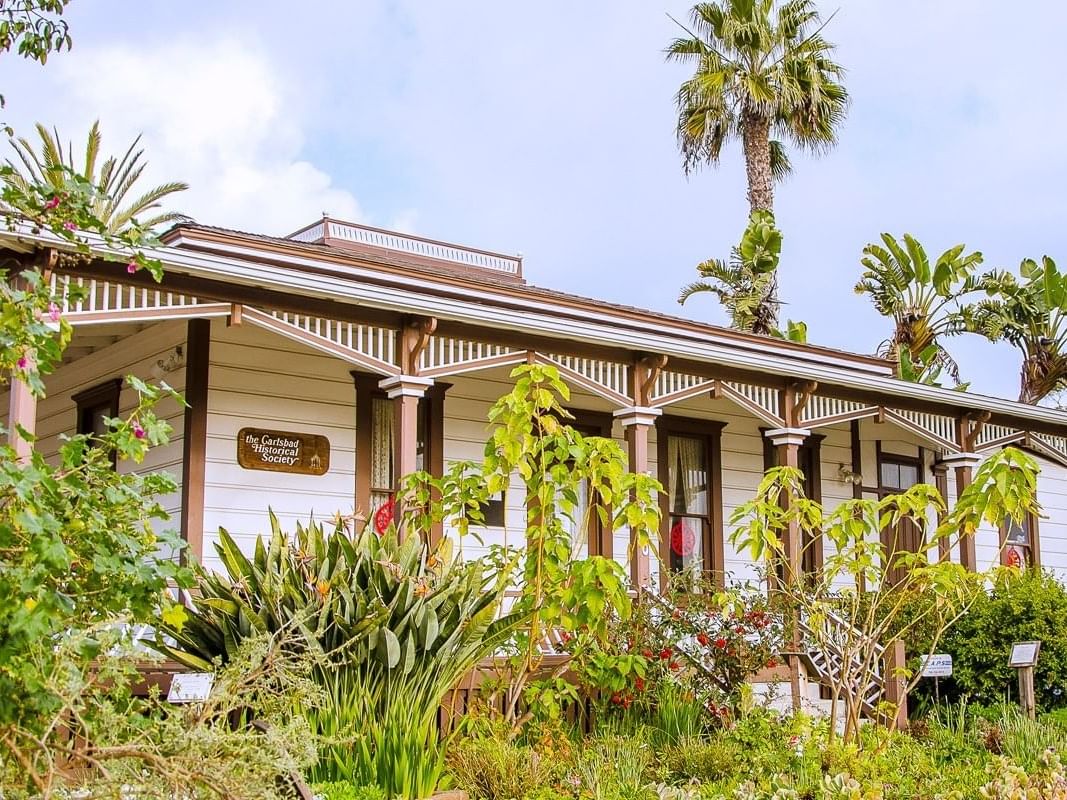
Located just a short walk from the beach in Carlsbad Village, the historic home is surrounded by beautiful gardens and mature landscaping. Its long porch, wooden siding, tall windows, and traditional design immediately transport you to an earlier Carlsbad.
Today, the property is especially meaningful because it allows visitors to experience a historic home within its surrounding landscape rather than simply seeing an old building squeezed between modern development.
Sit beneath the trees for a few minutes and imagine this area before busy streets and beach traffic.
It would have felt remarkably different.
The Magee Family & Early Carlsbad
The Magee House represents more than an architectural style.
It represents family life.
Homes like this were places where meals were prepared, children were raised, visitors were welcomed, and decisions about farms, businesses, and community affairs were discussed around the family table.
That’s one of the reasons I love including historic homes in Carlsbad’s story.
They bring history down to a human scale.
The Gerhard Schutte House
Another of Carlsbad’s most recognizable historic homes began as a private residence.
The grand Victorian building that later became known as the Twin Inns was originally associated with Gerhard Schutte, an important figure in Carlsbad’s early development.
The house was dramatically different from many of the more modest residences surrounding it.
Its elaborate Victorian architecture included features such as:
- Large porches
- Tall windows
- Decorative woodwork
- Prominent rooflines
- Spacious gathering areas
- An impressive street presence
The home reflected the ambitions of Carlsbad’s early developers, who believed their young community could become an important destination.
Eventually, the private residence evolved into a hospitality landmark, demonstrating how historic buildings often change purpose as a city grows.
The Cohn House
The Cohn House is another name connected with Carlsbad’s early residential history.
Homes such as the Cohn House help preserve the story of the merchants, entrepreneurs, farmers, and families who settled in the community during its formative years.
These houses weren’t simply architectural objects.
They were part of neighborhoods.
Neighbors visited one another. Children played nearby. Families walked to local businesses and churches. Residents watched as the railroad brought new people into town and as Carlsbad slowly expanded around them.
Each surviving home gives us another piece of that picture.
Historic Homes of the Barrio
Some of Carlsbad’s most important residential stories are found not in grand Victorian houses, but in the Barrio.
Generations of Mexican and Mexican-American families lived in this historic neighborhood while working in agriculture, operating businesses, raising families, and helping build the community.
The homes here tell a different but equally important story.
They remind us that historic significance isn’t determined by the size or grandeur of a building.
A modest family home can hold generations of memories.
Porches became gathering places. Gardens produced food. Kitchens preserved family recipes. Children grew up and raised families of their own nearby.
Together, these homes created a neighborhood—and that neighborhood became an important part of Carlsbad’s identity.
Homes & Carlsbad’s Agricultural Past
Before tourism became such an important part of the local economy, agriculture shaped much of Carlsbad.
Flower fields, strawberries, avocados, beans, citrus, and other crops covered areas that are neighborhoods today.
Families lived close to where they worked.
Historic homes therefore help us connect the physical city with the agricultural stories we’ve been preserving throughout the Discover Carlsbad Library.
When you see an old house, try imagining what surrounded it when it was built.
Instead of subdivisions, there may have been fields.
Instead of a shopping center, an orchard.
Instead of a six-lane road, a dirt path.
That simple exercise completely changes how you see Carlsbad.
Architecture Worth Noticing
As you explore older sections of Carlsbad, look beyond the entire house and notice the smaller architectural details.
You may find:
- Wide front porches
- Wooden clapboard siding
- Double-hung windows
- Decorative trim
- Steep rooflines
- Original doors
- Craftsman influences
- Victorian details
- Spanish and Mission Revival elements
- Mature trees and historic gardens
Some homes have been carefully restored, while others have been remodeled and adapted for modern life.
Both situations tell us something about how Carlsbad has evolved.
Olde Carlsbad
To see another side of the city’s residential history, wander through Olde Carlsbad.
The neighborhood contains an eclectic collection of homes from different periods rather than one uniform architectural style.
That’s part of its charm.
Older cottages can sit near Spanish-style homes, mid-century residences, remodeled properties, and contemporary houses.
The result is almost like an architectural timeline of residential Carlsbad.
Unlike newer master-planned neighborhoods, where homes were often constructed during the same development period, Olde Carlsbad evolved gradually.
One generation built beside another.
From Historic Cottages to Modern Carlsbad
Comparing Carlsbad’s historic homes with today’s neighborhoods also reveals how dramatically ideas about California living have changed.
Early homes were generally smaller and more practical.
Modern Carlsbad residences may feature large windows, open floor plans, expansive kitchens, outdoor living areas, rooftop decks, and dramatic ocean views.
Yet one idea has remained remarkably consistent:
People want to live close to the coast and enjoy the Carlsbad lifestyle.
That was attractive more than a century ago, and it’s still attractive today.
Create Your Own Historic Homes Walk
A wonderful way to experience this history is to combine several historic areas into a leisurely Village walk.
Start at the Carlsbad Santa Fe Depot, then explore the older streets of the Village before heading toward Magee Park and the Magee House.
Continue toward the former Twin Inns, remembering that the famous landmark began as a residence.
From there, extend your walk toward the Barrio, where another important chapter of Carlsbad family and neighborhood history comes alive.
Don’t worry about checking buildings off a list.
Instead, look around.
Notice the porches.
Look at the windows.
Compare an old cottage with the modern home beside it.
Ask yourself what this street might have looked like 50, 75, or 100 years ago.
Cherimarie’s Local Perspective
Historic homes are some of my favorite places for understanding Carlsbad because they remind us that history happened in ordinary moments.
Someone sat on that porch.
A family gathered around that table.
Children ran through that yard.
Neighbors stopped to talk.
Someone looked toward the ocean and decided that Carlsbad was where they wanted to build a life.
We often tell history through important dates and famous names, but most of a community’s history is actually created through everyday life.
Historic homes help us remember the people behind the history.
Why Preservation Matters
Carlsbad will continue to change. That’s part of being a vibrant and desirable community.
But when every old building disappears, we lose more than architecture.
We lose physical connections to the people who came before us.
Preserving historic homes—or thoughtfully adapting them for new uses—allows future generations to stand in the same places, see the same architectural details, and better understand how their community developed.
Not every old house can or should become a museum.
But every historic home has a story worth discovering.
Seat at the Table
A historic house is more than wood, windows, and a roof.
It’s a container for memories.
Birthdays were celebrated there. Meals were shared. Children grew up. Families struggled, succeeded, laughed, grieved, and dreamed about their futures.
Collect enough of those family stories and something remarkable happens.
They become the story of Carlsbad.
So when you pass one of our city’s older homes, slow down and take another look.
Don’t simply ask, How old is that house?
Ask:
Who lived there—and what part of Carlsbad’s story did they help create?
Continue Exploring Historic Carlsbad
This story pairs especially well with the Historic Downtown Walk, Architecture Walk, Magee Park Walk, Historic Churches, Early Hotels, Barrio neighborhood story, and Public Art Walk. Together, these stories can become a complete Historic Carlsbad Walking Collection within the Discover Carlsbad Library.
And when visitors join Carlsbad Food Tours, we can bring many of these stories together while exploring the Village through its food, families, buildings, and history.
Taste the Food. Hear the Stories. Feel Like a Local.