
The Ukegawa Family Journey: From Japan to Carlsbad’s Strawberry Fields
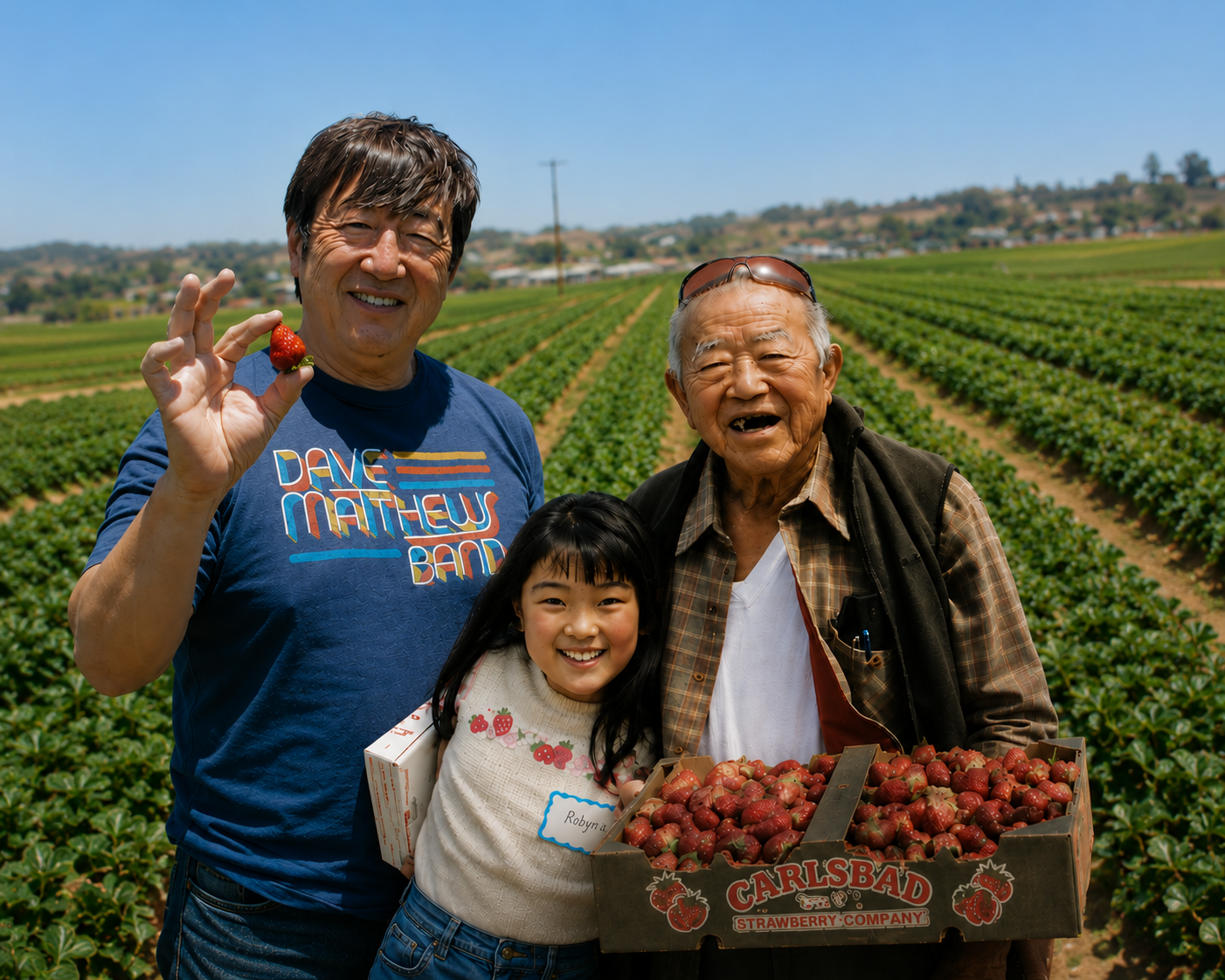
Today, when visitors pick strawberries overlooking the Agua Hedionda Lagoon or bring their children to the pumpkin patch each fall, they are experiencing far more than a family farm. They are stepping into one of Carlsbad’s most remarkable stories of resilience.
A New Life Begins
The Ukegawa story begins in Japan.
Like many Issei (一世)—the first generation of Japanese immigrants—Fukutaro and Tomoye Ukegawa left their homeland in the early 1900s with hopes of creating a better future in America. California offered fertile farmland, economic opportunity, and the chance to build something that could be passed from one generation to the next.
The family first settled in Tustin, where they established their roots in farming. Agriculture required long hours and endless determination, but the Ukegawas believed hard work would provide opportunities for their children.
Their American-born children became the Nisei (二世) generation—citizens of the United States by birth who would grow up balancing two cultures while embracing the American dream.
No one could have imagined how quickly that dream would change.
Pearl Harbor Changes Everything
The attack on Pearl Harbor on December 7, 1941, changed the lives of Japanese Americans forever.
Following Executive Order 9066, the Ukegawas, along with more than 120,000 Japanese Americans, were forced to leave their homes with only what they could carry.
Like thousands of farming families, they were forced to sell their farm, equipment, and possessions for pennies on the dollar.
The Ukegawas family was incarcerated at the Poston War Relocation Center in Arizona.
Finding Purpose at Poston
Life inside Poston was difficult, but people searched for ways to maintain hope and dignity.
Hiroshi joined the government’s Work Furlough Program, leaving the camp temporarily to work as a field hand harvesting crops needed during the war. Even under extraordinary circumstances, farming remained part of his identity.
Later, he joined the U.S. Army Paratroopers, choosing to serve the country despite the hardships his family had endured.
One unexpected blessing also came from Poston.
While living in the camp, the Ukegawas became friends with another Japanese-American family from Oceanside. That friendship would help shape the family’s future after the war.
Starting Over
When the war ended, there was no farm waiting for the Ukegawas.
Everything had to be rebuilt.
Following the advice of the family they met at Poston, they settled first in San Luis Rey, Oceanside, living next door to their new friends.
There, they returned to what they knew best—farming.
The family grew tomatoes while saving enough money to begin again.
Then, in 1952, Hiroshi Ukegawa started farming in Carlsbad, drawn by the area’s fertile soil and ideal climate.
By 1959, the family had made Carlsbad their permanent home.
Until her passing on July 30, 2026, the family matriarch lived overlooking Agua Hedionda Lagoon, a lasting reminder of the remarkable journey that brought the Ukegawa family to Carlsbad.
Four Generations of Farmers
The Ukegawa story spans four generations.
- Issei (一世): Fukutaro and Tomoye, who immigrated from Japan.
- Nisei (二世): Hiroshi, who rebuilt the family farm after World War II.
- Sansei (三世): Jimmy Ukegawa and his siblings, who expanded and modernized the family business.
- Yonsei (四世): Robyn Ukegawa and the next generation, who continue sharing the family’s agricultural heritage.
Hiroshi and his wife raised five children.
Among them was Jimmy Ukegawa, the second oldest, who would become the face of the Carlsbad Strawberry Company.
Although two of the siblings have since passed away, three remain, continuing the family’s close connection to the land.
Building the Carlsbad Strawberry Company
Over the decades, the family built one of Carlsbad’s most recognizable agricultural businesses.
As development spread across North County, the Ukegawas watched neighboring farms disappear.
Like many family farmers, they faced increasing costs and shrinking farmland.
At one point, the family even experimented with farming in Mexico, hoping lower operating costs would improve profitability. Ultimately, they decided their future belonged in Carlsbad.
Rather than leaving agriculture behind, they adapted.
The Carlsbad Strawberry Company evolved into an agritourism destination where visitors could experience farming firsthand through U-pick strawberries, pumpkin patches, corn mazes, educational programs, and family activities.
Ironically, while strawberries remain the farm’s signature crop, pumpkin season has become the business’s largest annual source of income, helping sustain the farm throughout the year.
A Living Legacy
Today, the Carlsbad Strawberry Company farms approximately 40 acres, with about 14 acres planted in Albion strawberries each season.
Each spring, families fill baskets with fresh berries.
Each autumn, children run through corn mazes, pick pumpkins, and meet farm animals.
Most visitors see a wonderful family destination.
Those who know the story see something even more meaningful.
They see the legacy of immigrants who crossed the Pacific Ocean seeking opportunity. They see a family separated by war but reunited through determination. They see four generations who refused to give up on farming, even as the world around them changed.
Cherimarie’s Reflection
As someone who has lived in Carlsbad for more than 30 years and loves sharing its history, I think the Ukegawa family represents the very best of our community.
Their story reminds us that Carlsbad isn’t defined only by its beaches or beautiful weather. It’s defined by the people who built it—families who endured hardship, embraced new beginnings, and invested their lives in this community.
When I drive past the strawberry fields overlooking the Agua Hedionda Lagoon, I don’t just see rows of berries.
I see courage.
I see perseverance.
I see generations of a family whose roots stretch from Japan to Tustin, through Oceanside, and finally to Carlsbad.
Their story isn’t just the history of a farm.
It’s the story of how hope, hard work, and family can overcome even the greatest challenges—and how that legacy continues to grow with every season.
- Carlsbad Strawberry Company
- Bean Fields of Carlsbad
- Mellano & Company
- Edwin Frazee
- Arthur Gage & The Flower Fields
- Ukegawa Family
- Avocado Groves of Carlsbad
Written by Cherimarie Poulos
Cherimarie Poulos is the founder of Carlsbad Food Tours and has proudly called Carlsbad home for more than 30 years. Passionate about the city’s history, beaches, wildlife, restaurants, and local culture, she created the Discover Carlsbad Library to help visitors and residents experience Carlsbad like a local through authentic stories, insider tips, and unforgettable experiences.
Want to discover even more of Carlsbad’s hidden gems? Join Carlsbad Food Tours and experience the city’s rich history, fascinating stories, and incredible local restaurants—one delicious bite at a time. Taste the Food. Hear the Stories. Feel Like a Local.
- Posted in:
- Agriculture Heritage